

Home > News > Industry News
In the plastic home storage industry, brand owners and buyers have long faced a persistent pain point: how to rid products of the cheap "plastic look" and deliver superior quality value visually and tactilely. The solution lies not in switching to expensive raw materials, but in an underrated technology — surface finishing craftsmanship.
With the same ABS or PP raw materials, different surface treatments can elevate products from basic functionality to an enhanced aesthetic experience. From a commercial perspective, this article analyzes three mainstream surface finishing paths to help you select the optimal solution for targeted markets.
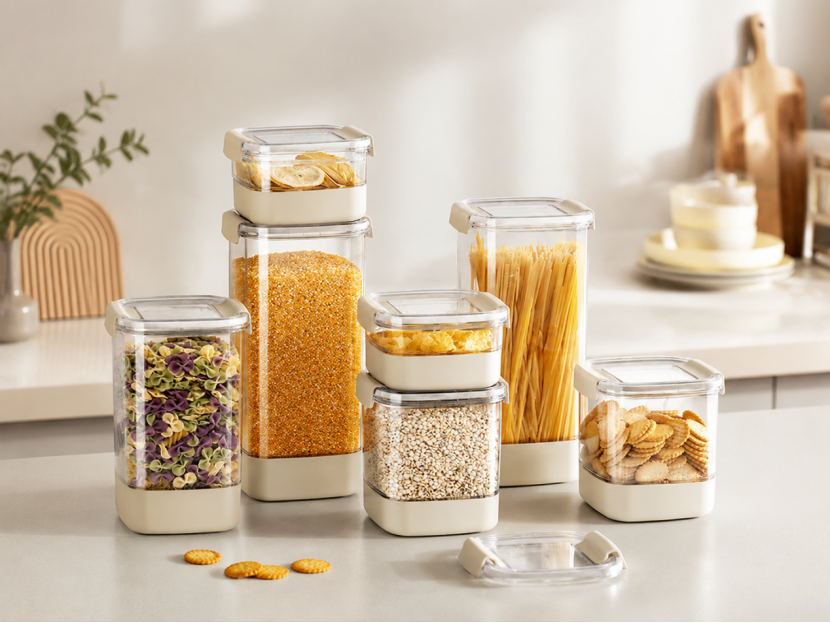
High-Gloss Mirror Finish: Eye-Catching with Trade-Offs
Craftsmanship & Visual Effect
High-gloss mirror finish is achieved through precision mold mirror polishing, endowing product surfaces with glass-like or ceramic-like luster. This treatment gives storage boxes a transparent, pristine texture, especially ideal for transparent or semi-transparent food canisters and cosmetic organizers. Under light irradiation, product edges appear sharp with enhanced color saturation.
Application Scenarios & Market Response
Boasting the strongest visual impact, high-gloss mirror finished products stand out prominently on open shelves and cabinet countertops, quickly capturing consumers’ attention. Among young consumers, this glossy finish is often associated with cleanliness and modern style. Additionally, the smooth, non-porous high-gloss surface allows effortless cleaning — oil stains and water marks can be wiped off easily, making it a mainstream choice for kitchen and bathroom storage categories.
Limitations to Note
High-gloss surfaces tend to show fine scratches easily. Minor daily scuffs and stacking friction may leave visible marks. Moreover, fingerprints and water stains are highly noticeable on glossy surfaces. Therefore, it is more suitable for scenarios with frequent cleaning and mild usage environments, such as food storage and cosmetic organization.
Cost Positioning
Mold polishing requires high precision, yet the cost increase for mass production is limited after one-time investment. It ranks as a mid-to-high-end surface finishing solution.

Fine Texture / Matte Finish: Understated, Durable Premium Choice
Craftsmanship & Visual Effect
Textured finish (also known as mold etching) creates delicate textures on mold surfaces via chemical or electrical discharge processing. After injection molding, products present an even matte texture with a mild, understated tactile feel. Common fine textures include calfskin grain and velvet grain, delivering a smooth, non-sticky hand feel.
Application Scenarios & Market Response
Matte finished products are more stain-resistant; fine scratches, fingerprints and dust are hardly noticeable on matte surfaces. This makes them highly popular in supermarket bulk channels and warehouse stores. Products maintain a brand-new look without elaborate maintenance. Furthermore, matte surfaces reduce light reflection, creating a calm and soft ambiance perfect for bedrooms and wardrobes.
Design styles pursuing minimalism such as Nordic and Japanese aesthetics prioritize matte texture above all else. Here, premiumness is embodied by restraint and reliability rather than flashy shine.
Cost Positioning
Mold processing cost for textured finish is moderate with high mass production stability. It offers a well-balanced cost-performance ratio and serves as a standard configuration for mainstream product lines.
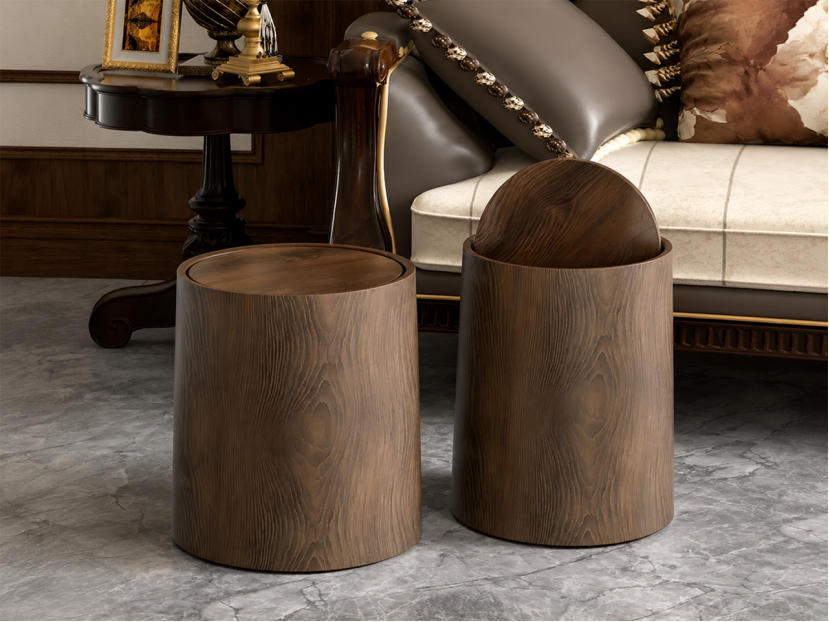
Fabric / Leather Embossed Finish: Ditch the Plastic Look for Light Luxury
Craftsmanship & Visual Effect
This is a cutting-edge direction in surface finishing. Molds are engraved with fabric or leather textures (such as linen grain, lychee grain, and Nappa grain), enabling plastic products to simulate natural materials both visually and tactilely. Combined with matte color masterbatch, the finish can closely replicate real fabric or leather texture, making it hard for consumers to distinguish plastic material by touch alone.
Application Scenarios & Market Response
This finish fundamentally solves the problem of eliminating the cheap plastic look. It is widely adopted by mid-to-high-end home brands, designer selections, and boutique supermarket shelves. A storage basket with delicate leather grain blends far better with solid wood bookshelves than high-gloss or ordinary matte products. It creates premium value premium space — consumers are willing to pay a higher price for this nature-simulated texture.
Potential Risks
More intricate textures raise mold manufacturing difficulty and costs. Meanwhile, overly deep textures may trap dirt and bring slight inconvenience to cleaning. In addition, faux leather grain requires high-quality color masterbatch and strict process control; otherwise, dull and unnatural colors will downgrade product grade instead.
Cost Positioning
It is a high-cost surface finishing option, ideal for flagship products and customized projects for high-end brands. Nevertheless, the investment usually yields positive returns in upgrading brand image.
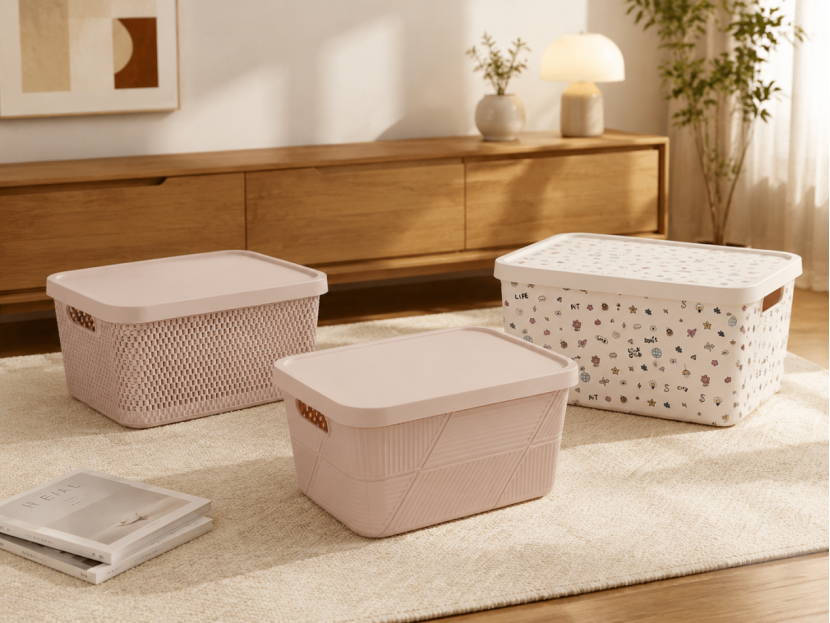
One Product, Three Styles: Distinct Commercial Positioning
Take a standard-sized lidded storage box with identical materials and structure as an example — only varying the surface finishing leads to clear market positioning differentiation:
The high-gloss mirror finish brings a relatively low unit cost increase, targeting the mass market as well as kitchen and bathroom categories with a mid-range retail pricing range. Its main downside is susceptibility to visible scratches, restricting its applicable usage environments.
The fine texture/matte finish incurs the lowest cost increment, covering a wide market including supermarket bulk sales, wardrobe and utility room storage. With affordable pricing and minimal operational risks, it is a safe and reliable option.
The fabric/leather embossed finish comes with a higher cost increase, focusing on high-end brands and designer collections. It supports premium retail pricing but demands sophisticated process control to ensure high yield rates.
Market acceptance follows a clear pattern: matte finish is a safe bet for mass distribution channels; high-gloss mirror finish achieves higher click rates for shelf displays and e-commerce main images needing instant visual appeal; while fabric/leather embossed finish serves as an irreplaceable differentiated tool for brand tonality building.
Professional Recommendations: Match Surface Solutions to Your Brand
As your supply chain partner, we not only handle production but also provide professional commercial-based selection consultation.
If your brand focuses on cost performance and the mass market, with mainstream channels in supermarkets and community stores:
Prioritize fine texture/matte finish as the main option. It balances durability, cost and premium texture, effectively reducing after-sales inquiries caused by scratch issues. Match with a small number of high-gloss mirror items as promotional traffic drivers to create visual differentiation on shelves with their glossy appeal.
If your brand positions itself as mid-to-high-end targeting quality lifestyle consumers, with channels in boutique supermarkets and official brand websites:
Adopt a combined strategy of high-gloss mirror and matte finishes. Apply high-gloss finish to kitchen and cosmetic storage for its easy-clean advantage, and matte finish to wardrobes and children’s rooms for stain resistance and soft aesthetics. Meanwhile, launch one flagship SKU with fabric or leather embossed finish as a highlight to elevate brand image.
If you run a designer brand or high-end home line pursuing a plastic-free aesthetic concept:
Opt decisively for fabric or leather embossed surface finishing. It is one of the core competitive edges to stand out from ordinary storage brands. Ensure texture design aligns closely with your color system, and communicate with us in advance for mold sampling to confirm the final effect.
Conclusion
Surface finishing is an effective way for plastic storage products to achieve perceived value upgrading. It does not alter the essence of raw materials, yet profoundly shapes consumers’ first impression and quality judgment of products.
From the bright luster of high-gloss finish, the mild elegance of matte texture, to the light luxury of leather embossing, each surface treatment has its own unique commercial positioning. Our core value lies in helping you pinpoint the perfect solution matching your brand positioning and channel strategy.
You do not need to explore process boundaries on your own. Simply tell us the market positioning and style you pursue, and we will work with you to customize the optimal solution.
Copyright © 2025 by Taizhou Greenside Co., Ltd. - Privacy policy