

Home > News > Industry News
In the plastic household storage sector, folding products have become an increasingly popular choice among consumers. Items like laundry baskets and storage boxes that can be compressed into a flat state when idle and quickly unfolded when needed not only solve the dilemma of storage containers themselves taking up space but also cater to modern households’ pursuit of flexible living spaces. Behind the seemingly simple folding structure lies a series of sophisticated engineering design considerations.
From a technical perspective, this article analyzes the core structural logic of folding storage products and provides practical reference for buyers in product selection and development.
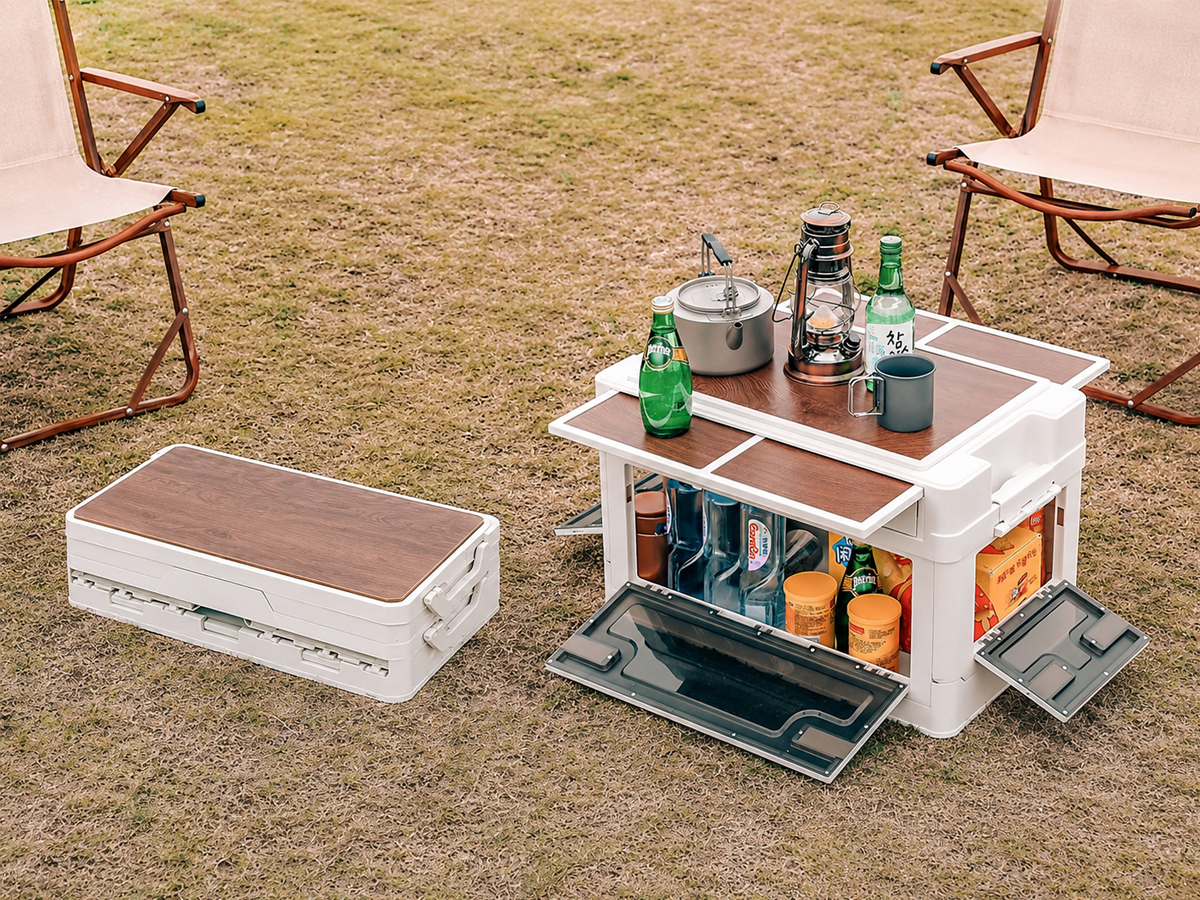
I. Core Value of Folding Storage: Reducing Burden for Storage Containers
Traditional rigid storage boxes occupy a fixed physical space whether empty or full. For urban households with limited living space, this means valuable storage room is permanently occupied by empty containers. The original design intention of folding storage is to resolve this contradiction — allowing storage items to "disappear" when not in use and function only when unfolded.
This feature is particularly suitable for the following scenarios:
Seasonal item storage: Storage boxes for seasonal quilts and winter clothes remain idle for most of the year. The foldable design enables them to be stored flat under beds or on top of cabinets.
Temporary storage needs: Large quantities of containers are temporarily required for family gatherings, house moves, and seasonal sorting, which can be folded away after use.
Business travel and outdoor activities: Foldable laundry baskets and wash bags are easy to carry without taking up luggage space.
E-commerce warehousing and logistics: The folding structure greatly reduces the volume of empty containers in transit and cuts logistics costs.
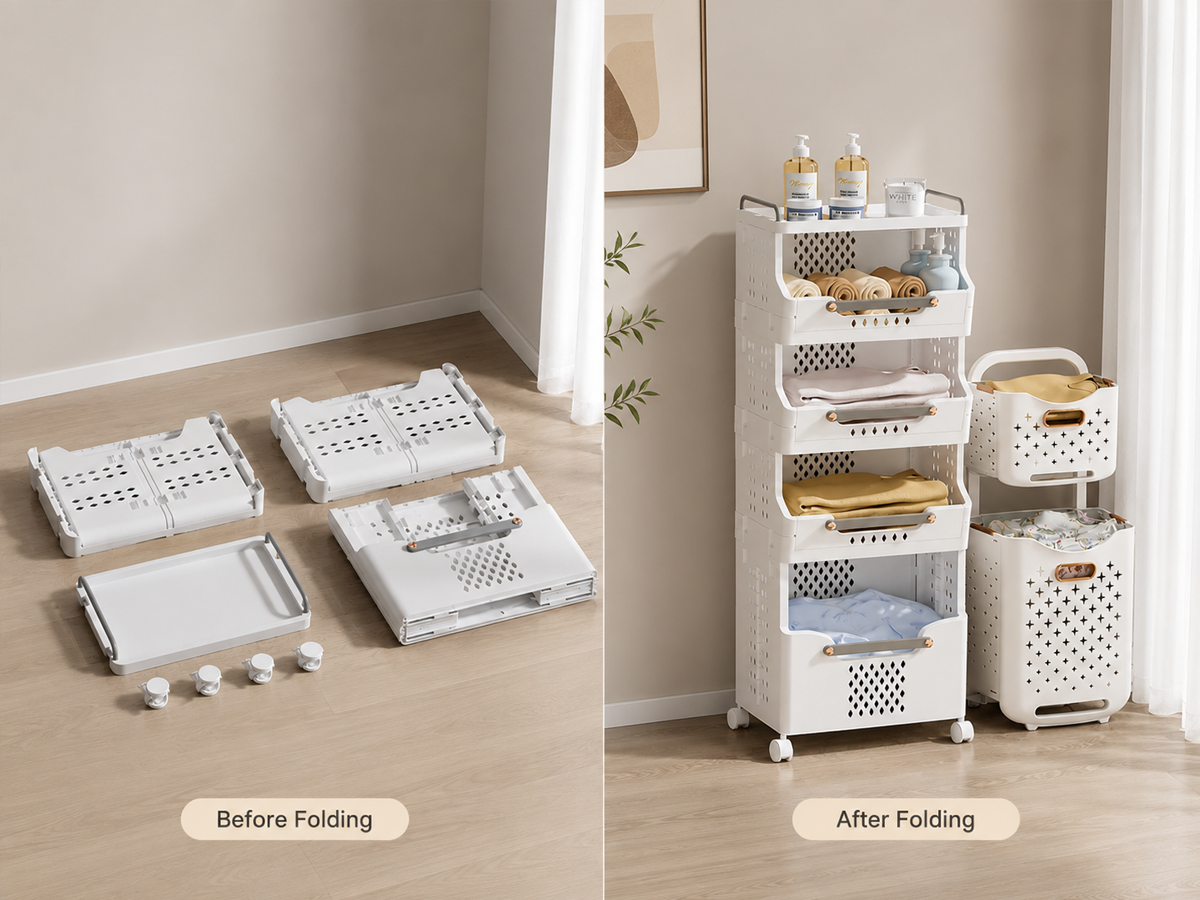
II. Core Structure 1: Hinges – The "Joints" of Folding
The soul of folding storage products lies in hinges (also known as folding joints), which determine smooth opening and closing performance and long-term durability.
Common Types of Hinges
Integrated thin-wall hingeFormed directly on the side walls of the box via injection molding with thinned bendable sections. This structure has no metal parts, featuring low cost, waterproof and rustproof properties, and integrated molding with no assembly required. Its downside is material fatigue at thin-wall areas after repeated bending, demanding high standards for material toughness and wall thickness control. Most all-plastic foldable storage boxes adopt this design.
Assembled independent hingeSeparate hinge components are fixed to the main body via buckles or screws. It can withstand more opening and closing cycles and allows replacement if damaged. However, it increases part costs and assembly procedures, and metal shafts or buckles may get rusty. It is mostly used in high-end heavy-duty folding products.
Hinge-free folding structureRelies on the product’s own geometric deformation to achieve folding, such as silicone folding bowls and soft TPE laundry baskets. Such products fold more compactly but have lower load-bearing capacity and shape stability, ideal for lightweight flexible storage.
Key Factors Affecting Hinge Service Life
Material selection is critical. PP (Polypropylene) boasts excellent resistance to bending fatigue and can pass millions of hinge durability tests, making it the top choice for thin-wall hinges. PS is brittle and rarely used for structures requiring repeated folding.
Round corner and transition design are equally important. Sufficient fillet radius must be designed at turning points of hinge areas to avoid stress concentration. Poorly designed structures will develop white marks or even fracture after just a few hundred folds.
In addition, the mold gate position directly affects molecular orientation in hinge areas. Mold design should align the molten material flow direction parallel to the folding axis to achieve optimal bending durability.
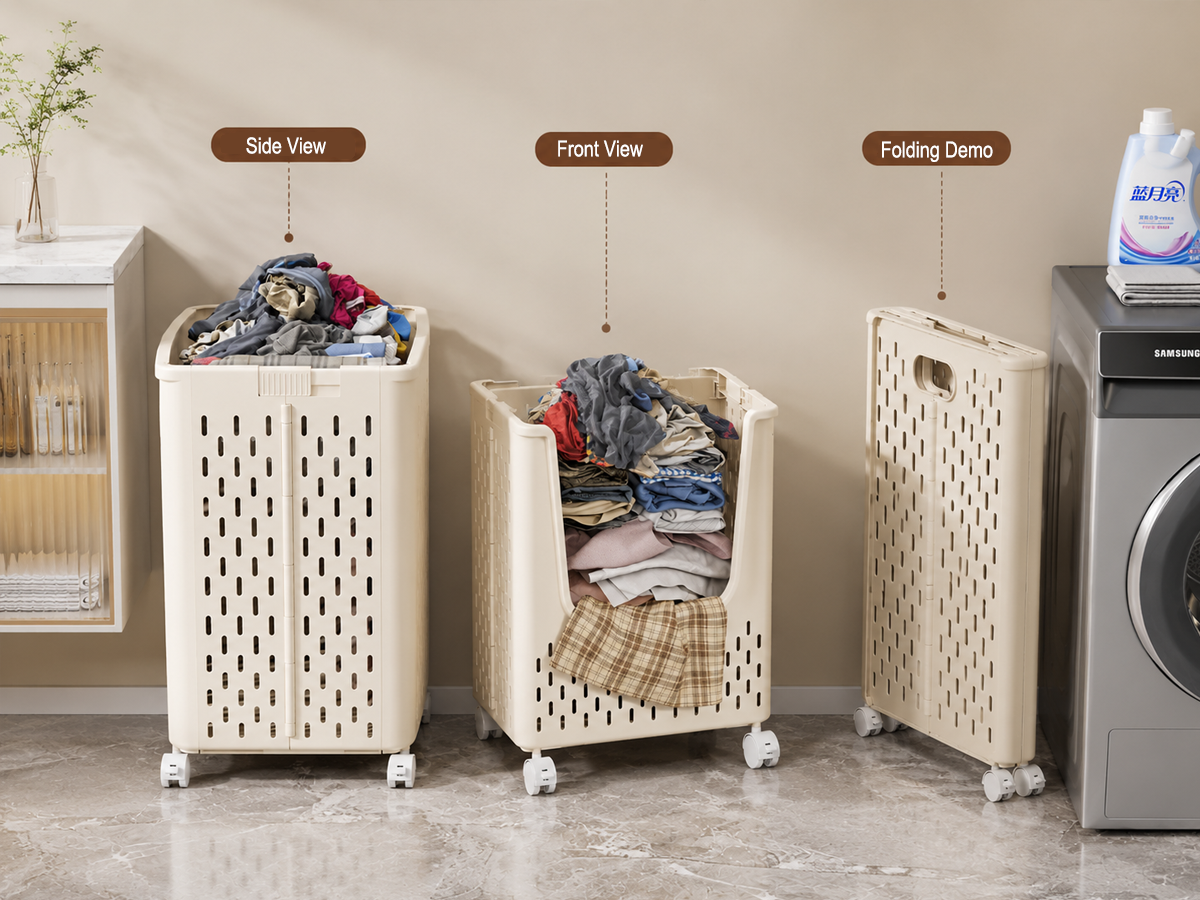
III. Core Structure 2: Wall Thickness Control – Balancing Lightweight and Toughness
A defining feature of folding products is compressibility, which requires thin wall thickness. However, overly thin walls lead to insufficient strength, causing deformation or rupture when fully loaded with heavy items. Engineers must strike a balance between foldable flatness after compression and structural strength after unfolding.
Conventional Wall Thickness Range
The main wall thickness of ordinary foldable storage boxes ranges from 0.8mm to 1.5mm, 30% to 50% thinner than rigid boxes of the same size (2.0mm to 2.5mm). Foldable laundry baskets adopt even thinner walls of 0.5mm to 0.8mm, with strength reinforced by reinforcing ribs and corrugated structures.
Common Methods for Strength Compensation
1.Reinforcing rib layout: Grid or well-shaped reinforcing ribs are arranged on stress-bearing bases and side walls to enhance rigidity with minimal material increase.
2.Corrugated/wave profile structure: Flat side walls are designed into corrugated shapes, similar to corrugated cardboard, which greatly improves the bending moment of inertia. Most foldable laundry baskets adopt this geometric reinforcement principle.
3.Variable wall thickness: Local thickening around hinge areas ensures bending durability while maintaining overall lightweight design.
Process Challenges
Ultra-thin wall thickness raises higher requirements for injection molding. Excessive injection speed may cause air trapping or insufficient filling; mold vent grooves must be precisely manufactured; high melt flow index materials are required. This calls for manufacturers with mature experience in thin-wall injection molding.
IV. Core Structure 3: Resilience & Self-locking – Stability After Unfolding
Folding products must maintain a stable shape after unfolding without accidental collapse during use, which relies on well-designed locking mechanisms.
Common Locking Mechanisms
Buckle & fastener type: The most widely adopted design. After unfolding, buckles on side walls automatically lock into grooves of adjacent panels and require moderate pressure to unlock, suitable for small and medium-sized storage boxes.
Bottom press locking: Pressing the bottom panel pushes the surrounding side walls outward to lock in place; unlocking requires pressing and releasing from the inner bottom, commonly used for large folding storage bins.
Side wall self-locking angle: Side walls are designed with a slight interference fit angle (such as trapezoidal taper) to maintain unfolded stability by friction. It features the lowest cost but relatively weaker stability.
Tactile Experience & User Experience
High-quality folding products deliver a crisp positioning feedback — an obvious click sound or tactile pause when fully unfolded to confirm locking. Unlocking force should be moderate, operable easily with one hand or both hands.
Factors Affecting Resilience Durability
Repeated folding may cause permanent deformation of plastic parts, leading to loose locking. Materials with low creep properties are required. PP performs well in this aspect, while some recycled materials show accelerated creep rate due to degraded molecular chains.
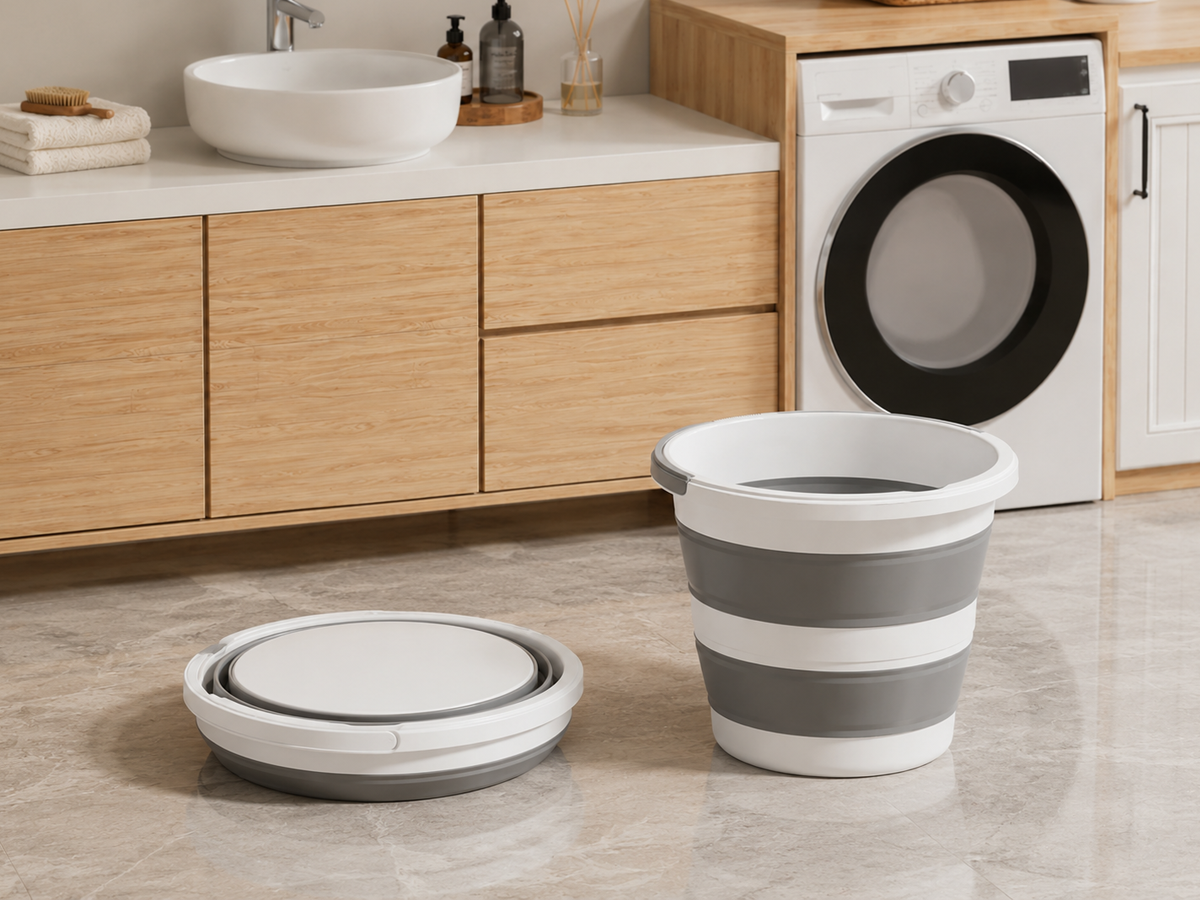
V. Material Selection: The Invisible Foundation of Folding Products
Different folding products have differentiated material requirements:
For heavy-load foldable storage boxes: High-toughness copolymer PP is recommended, featuring outstanding bending fatigue resistance, impact resistance and low creep.
For flexible folding laundry baskets: PP or TPE-PP composite materials are commonly used. Pure PP with corrugated structure provides self-support, while TPE offers a soft touch.
For foldable food storage containers: Food-grade PP is mandatory, with folding parts matched with dedicated silicone sealing gaskets instead of thin plastic bending structures.
For lightweight folding shelves: Reinforced PP or ABS are mainstream options, requiring higher static load-bearing capacity with lower folding frequency.
Application Boundaries of Recycled Materials
Post-consumer recycled PP usually has inferior bending fatigue performance compared with virgin PP due to molecular chain degradation during recycling. For high-frequency folding products, it is recommended to control the proportion of recycled materials or apply them only to non-folding components.
VI. Application Scenarios & Product Selection Guidelines for Common Folding Products
Foldable Laundry Basket
Core selling points: Thin-wall corrugated structure with self-supporting shape after unfolding; folded thickness of only 3-5cm, easy to tuck into bathroom cabinet gaps or luggage.Selection tips: Check reinforced design at the joint of handles and basket body; ensure smooth hinge areas without white marks; confirm anti-slip texture on the bottom.Target customers: E-commerce channels, university dormitory supplies, travel essentials, small apartment residents.
Lidded Folding Storage Box
Features: Capacity ranges from 50 to 100 liters when unfolded with stable stackability; folded volume reduced to about one-quarter of the original size, ideal for storing seasonal clothing and outdoor gear.
Selection tips: Verify alignment precision of stacking buckles, test lid sealing performance and opening/closing durability, and check reliability of folding locking mechanisms.Target customers: Large supermarkets, warehouse retail stores, moving service companies, customized brand merchants.
Telescopic/Folding Storage Shelf
Adjustable height or width via X-shaped connecting rods or slide rails to instantly expand countertop or layered storage space.Selection tips: Focus on rust-proof treatment of metal connectors and anti-aging performance of plastic parts, especially for kitchen and bathroom applications.Target customers: Kitchen storage brands, balcony gardening suppliers, DIY tool brands.
VII. Value-added Services for Manufacturing Partners
As a professional manufacturer of plastic storage products, we have accumulated mature design specifications and production craftsmanship in the folding product sector. From hinge fatigue life simulation and wall thickness mold flow analysis to material formula optimization and mold precision control, we support turning product concepts into reliable mass production.
We recognize that every millimeter reduction in folded thickness cuts substantial logistics costs for clients, and every 10% improvement in unfolding stability reduces return complaints from end consumers. These seemingly minor engineering decisions ultimately translate into market competitiveness.
If you are planning to launch a folding storage product line or optimize the folding structure of existing products, our team provides full collaboration from design review to mold development, to jointly create truly space-saving and durable storage solutions.
Copyright © 2025 by Taizhou Greenside Co., Ltd. - Privacy policy