

Home > News > Company News
In the detailed world of home storage, a seemingly simple design choice can often determine the success or failure of a product in the market. As global consumer demand for home products evolves from "meeting basic functions" to "enhancing quality of life," even the design of a laundry basket warrants re-examination. Today, we delve into the ventilation designs found on laundry baskets—they are far from arbitrary decorations but rather a precise calculation blending materials science, structural engineering, and consumer psychology.
I. Trend Insight: Why Has "Breathable" Storage Become Mainstream?
Currently, the global home market, especially mature markets in Europe and America, is showing a clear preference for "healthy storage." Consumers are increasingly concerned about hygiene and maintenance issues during product use. Driven by social media and lifestyle influencers, keywords like "airy," "ventilated," and "easy to clean" have become high-frequency terms for searching and purchasing home storage products.
For the laundry basket category, the problems caused by traditional enclosed designs—dampness, odor, and mold growth—are now widely recognized. Market trends clearly point towards solutions that promote air circulation and keep the pre-wash environment for clothes dry. Ventilation design is the most direct and effective engineering response to this trend. It is no longer an option but has become a **core design element** for meeting the health needs of modern homes.
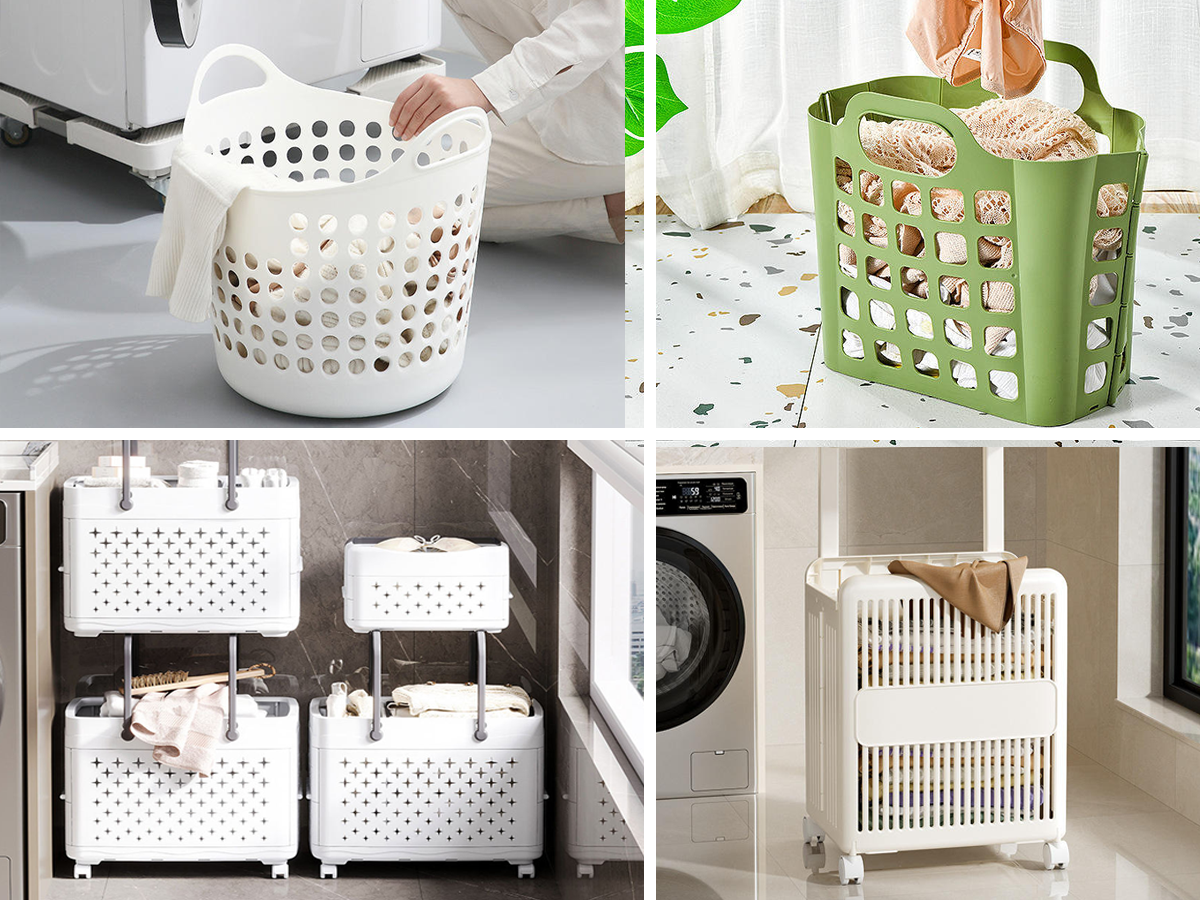
II. Design Decoded: The Functional Language Behind Different Ventilation Patterns
Ventilation designs in the market vary widely, but their core logic can be parsed. Different geometric shapes are essentially functional expressions targeting different demand priorities.
1. Classic Round Holes: The Balanced Choice for Safety and Practicality
This is the most common and enduring design. Round holes provide balanced ventilation, with their greatest advantage being **exceptional safety**. Smooth, rounded edges effectively prevent fabric snagging or accidental bumps, making them particularly suitable for family scenarios with children or pets, where safety is a priority. From a manufacturing perspective, circles are also easier for mold production and quality control, representing a reliable choice for achieving stable mass delivery.
2. Square/Rectangular Grid Structure: Modern Aesthetics and Robust Load-Bearing
Grids composed of straight lines, whether square or rectangular, exude a clean, rational, modern feel. This design appears more structured visually, and its core advantage lies in providing excellent overall rigidity and load-bearing capacity through its crisscrossing structure. For consumers who prefer minimalism, value product structure, or have significant storage needs for heavy clothing, the square grid design offers a combination of aesthetics and strength.
3. Hexagonal Honeycomb Pattern: The Epitome of Nature-Inspired Efficiency
The hexagon is one of nature's most efficient structures (e.g., honeycombs). Applied to laundry baskets, the honeycomb ventilation pattern achieves the maximum ventilation ratio per unit area while constructing an exceptionally sturdy load-bearing structure with minimal material usage. This design represents the fusion of "lightweight" and "high performance," imbued with a sense of technology and intelligent design, often appealing to consumers seeking cutting-edge design and high-performance products.
4. Artistic Ventilation Patterns: The Leap from Tool to Decor
Irregular artistic holes in shapes like flowers or leaves have aesthetic expression and emotional connection as their primary mission. This type of design elevates a functional storage tool to a part of home decor, seamlessly integrating into specific interior styles (e.g., Scandinavian, rustic, bohemian). It serves consumers who view every corner of their home as an extension of personal style, achieving a value transition from a utilitarian item to an "ambiance piece."
III. Precision Details: The Dividing Line Between Excellent Design and Ordinary Manufacturing
Excellent ventilation design goes far beyond mere patterning. The following manufacturing details are key to distinguishing ordinary products from high-quality ones and serve as a direct window for B2B clients to assess a supplier's craftsmanship:
Refined Edge Finishing: High-quality products must ensure that the inner wall of every hole is smooth, free from any injection molding burrs. This depends on precise mold machining and rigorous post-production processing, directly impacting whether delicate clothing fabrics could be damaged.
Holistic Structural Consideration: The arrangement of holes must be co-designed with the overall reinforcement rib layout of the basket body. This ensures that even with extensive ventilation, the product maintains excellent three-dimensional form when full of clothes, with a stable base and reliable handle connections.
Cleaning-Friendly Principle: The design must consider ease of daily maintenance. The internal structure should avoid hard-to-reach dead corners; the ideal state allows for easy wiping with a damp cloth or direct rinsing with water.
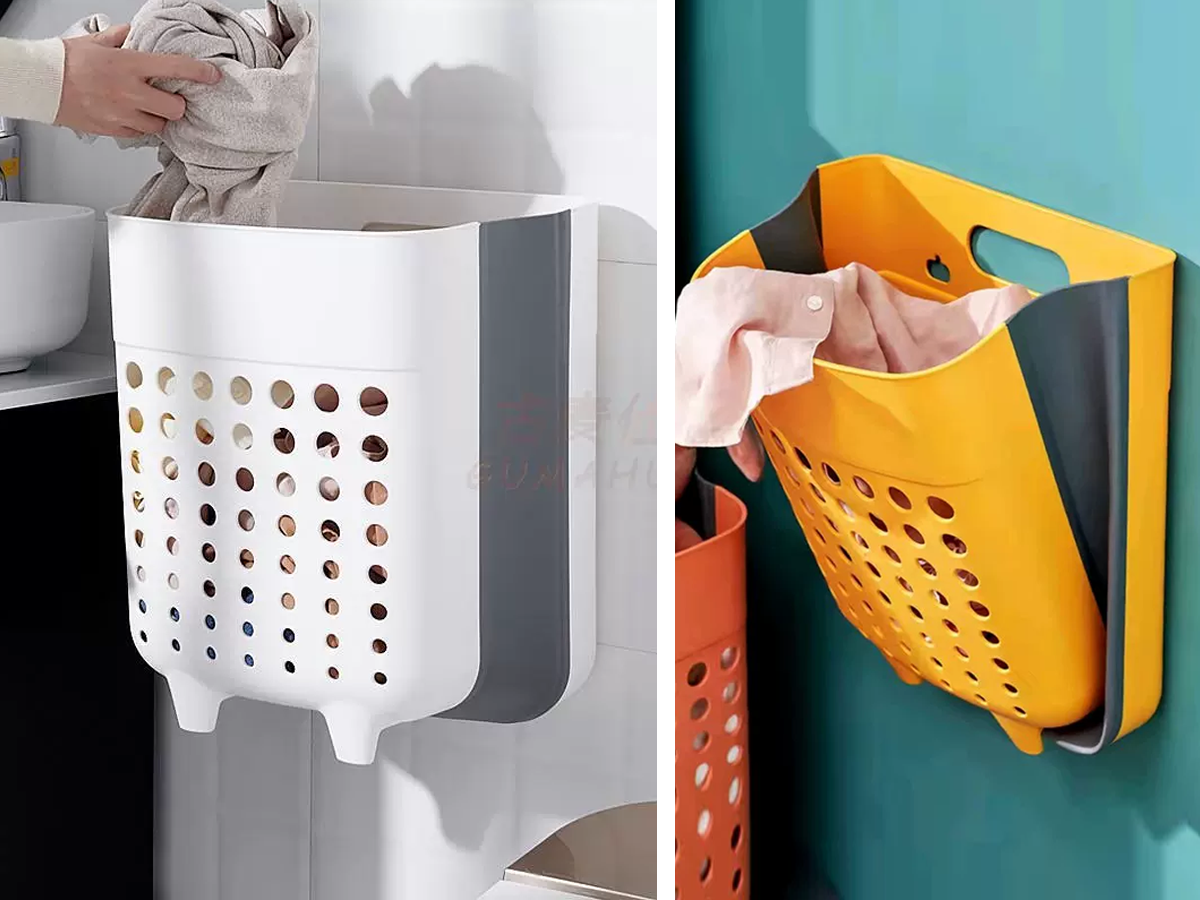
IV. Selection Strategy Recommendations for Purchasers and Brand Owners
Faced with diverse ventilation designs, we recommend that procurement decision-makers follow the logic below to match the most suitable product for their target market:
1. For Mass Market and Cost-Effectiveness Priority: The Classic Round Holes series. It carries the lowest risk, has the broadest appeal, and is a safe bet for ensuring circulation efficiency and customer satisfaction.
2. For Emphasizing Modern Quality and Durability: The Square Grid structural product line. The sense of solidity and reliability it conveys is suitable for building a brand's professional and quality image.
3.For Targeting Niche Markets and Showcasing Innovation: Promote Hexagonal Honeycomb or unique Artistic Ventilation designs. Such products can attract consumers with higher demands for design and quality of life, enhance brand premium capability, and create differentiated competitiveness.
Conclusion: Small Holes, Big Implications
In today's increasingly competitive manufacturing landscape, every detail of a product becomes a carrier of value. The ventilation design on a laundry basket proves from a micro-perspective that truly good design is the perfect unity of form, function, and manufacturability.
It is not only a channel for air to flow but also a channel for product value to flow in the market. Understanding and mastering the logic behind these designs means being able to respond more accurately to consumer trends, engage more professionally with the supply chain, and ultimately provide end consumers with quality products that truly solve problems and enhance experiences. This is precisely the key step for the home manufacturing industry to move from cost competition to value creation.
Copyright © 2025 by Taizhou Greenside Co., Ltd. - Privacy policy